In search engine optimization, semantic SEO plays an important role in improving the context of a blog or website and providing the relevant results for the rank. It focuses on the context of the topic and the intention of the user rather than only focusing on a single keyword. Using semantic SEO helps you increase the rank of your website or blog. This post is all about what semantic SEO is. Additionally, it also explains how to optimize for semantic search. But let us first understand the concept of semantic SEO.
Understanding Semantic SEO
In simple words, semantic SEO adds value to the content by optimizing the context of the topic rather than a single keyword or a paragraph. Using this process helps improve your website’s crawling, which is done by search engines like Google. It helps increase your website’s ranking in SERPs. It analyzes users’ input, understands users’ intentions, and provides related results to them.
Why Use Semantic SEO?
Using semantic SEO helps in improving search engine optimization. It mainly focuses on optimizing the context of the website instead of just a keyword. It helps increase the ranking of a blog or a website by providing relevant searches to the users, improving the user experience.
How to Optimize for Semantic Search
When optimizing for semantic SEO, ensure that you understand the user’s intention. Focus on creating content that provides easily understandable answers and covers all the related topics. To improve understanding of the search engine, you should use schema markups.
Optimizing for Semantic Search
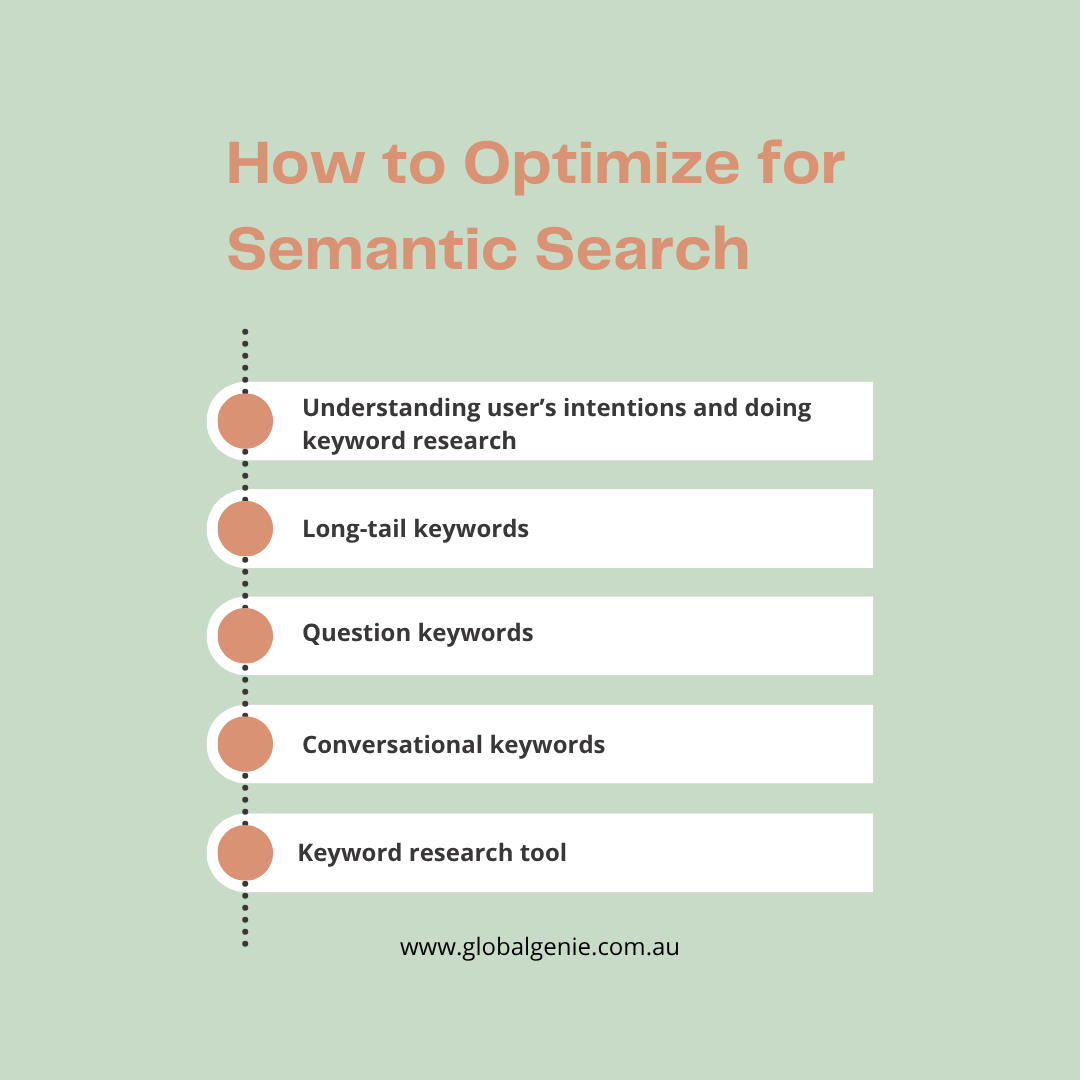
- Understanding users’ intentions and doing keyword research
- Long-tail keywords
Use unique and specific long-tail keywords that understand the user’s intention.
- Question keywords
Add questions to your content as it directly impacts users’ intention and helps rank higher in search engines
- Conversational keywords
Using phrases as keywords in context makes it look natural and helps increase ranking.
- Keyword research tool
Keyword research tools like Google Keyword Planner, Ubersuggest, and Semrush help improve visibility as they provide better and relevant keywords according to your context.
- Optimizing Content
- Content Quality
Create high-quality, detailed, and informative content that answers all the questions of the user and provides them with the information they are looking for.
- Building Topic Clusters
Topic clusters are articles that are linked together and cover the main topic from different angles. Creating cluster topics helps the search engine understand the main point of the whole article.
- Markup Schemas and Data Structure
Create structured data and context, as it is easier to read through. Using markup schemas helps provide structured information to search engines, like Google.
- LSI (Latent Semantic Indexing)
Using LSI keywords helps the search engine to understand the topic on your page. It also helps rank for long-tail keyword searches in the search engine.
- Handling On-Page SEO
- Title Tags and Headings
You must use short and understandable headings to make it easier for the search engines to understand what your context is about. Using descriptive title tags helps search engines to show your results to the targeted audience.
- Alt text of Images
Using alt text to describe the image helps the search engines understand what the image is about. This also helps increase your ranking in search engine results.
- Doing Internal Linking
When you do internal linking in your context, it helps the search engine to understand, crawl, and navigate your site better.
- Entity SEO
- Identifying Entities
You must identify all the relevant and important entities of your topic, as they make the search easier.
- Optimizing for entities
Optimizing and explaining these key entities related to your topic, as they make it easier for the search engines to understand your context better.
Benefits of using Semantic SEO
There are many benefits of using semantic SEO, which are
- It provides relevant content to the user and helps improve the search results in SERPs
- It helps search engines to understand and crawl your content in a better and easier way and improve the ranking in the search engine.
- Semantic SEO helps understand the user’s intention. It analyzes the user’s input and provides them with meaningful and high-quality content.
- It helps increase organic traffic and improves user experience by providing relevant searches.
- It increases the visibility of your content by making it appear in featured snippets and other search results on SERPs.
- It helps you establish brand authority by providing high-quality and relevant content to the users.
Conclusion
Semantic SEO is a process that helps in optimizing the topic of your content rather than a single keyword or paragraph. It helps your content to rank higher on the result pages. Using semantic SEO helps improve the search engine optimization and helps the website rank higher in search engine results.
You can optimize semantic searches by following the steps provided above. Ensure that you understand the user’s intention and perform keyword research accordingly.